
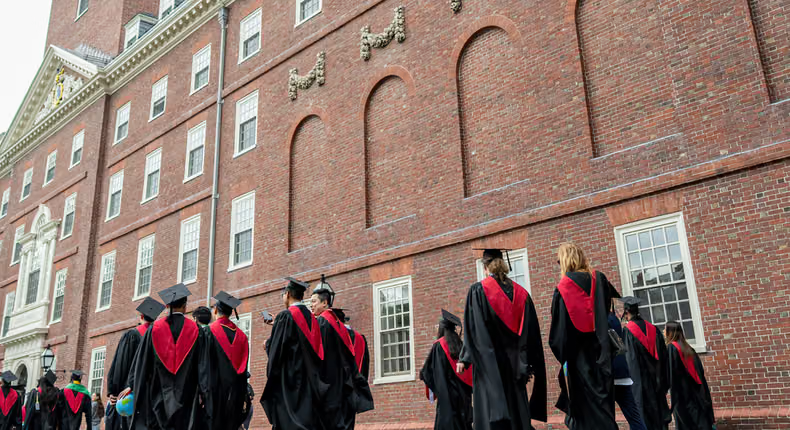

Universities across the United Kingdom are tightening admission and sponsorship procedures for international students, including applicants from Nigeria, Pakistan and Bangladesh, amid stricter government visa-compliance requirements.
The measures are intended to protect universities from breaching immigration rules that could result in the loss of their licences to sponsor international students.
According to an analysis of UK Home Office data by the Financial Times, 10.5 per cent of UK study visa applications were withdrawn in the first half of 2026, compared with 2.3 per cent during the same period in 2025 and 0.4 per cent in 2023.
Nigeria recorded a withdrawal rate of 22.7 per cent, behind Pakistan at 40.9 per cent and Bangladesh at 23.5 per cent. India’s rate stood at 5.2 per cent.
UK Government Introduces Stricter Compliance Rules
The recruitment changes follow tighter requirements under the Home Office’s Basic Compliance Assessment for institutions sponsoring international students.
Since June 1, universities have been required to keep visa refusal rates below five per cent, down from the previous threshold of 10 per cent. They must also ensure that at least 95 per cent of sponsored students enrol and that the course-completion rate remains at 85 per cent.
Institutions that repeatedly fail to meet these requirements risk enforcement action and could ultimately lose their student sponsorship licences.
The UK government says the measures are designed to prevent abuse of the student visa route, including cases involving individuals who enter the country on study visas before claiming asylum or engaging in illegal work.
Migration and Citizenship Minister Mike Tapp said the government remained open to genuine international students but maintained that the visa system must not be used to facilitate asylum claims or illegal employment.
Universities Review Recruitment from Nigeria and Other Countries
Several UK institutions have introduced tighter screening procedures, restricted recruitment from selected markets or paused some sponsorship activities.
The universities identified in the report include Sunderland, Chester, Wolverhampton, East London, Coventry and Hertfordshire, as well as Oxford Brookes University, Glasgow Caledonian University and BPP University.
Oxford Brookes, for instance, has paused some sponsorship from Bangladesh and Pakistan while introducing additional compliance measures for applicants from Nigeria and India.
University of Sunderland Vice-Chancellor Sir David Bell said the increase in visa refusals had prompted some universities to take preventive action rather than risk falling short of government requirements.
He explained that institutions were reducing recruitment from international markets where visa applications faced greater scrutiny.
The measures could make the admission process more demanding for applicants from affected countries, although the restrictions vary between institutions.
Financial Pressure on UK Universities
The stricter recruitment environment comes as universities face significant financial challenges and rely heavily on international tuition fees.
International students generated £12.4 billion in tuition-fee income for UK universities during the 2024/2025 academic year, accounting for approximately 23 per cent of total university income, according to the report.
However, weaker international recruitment and rising operating costs have placed additional pressure on university finances.
The report stated that 48 publicly funded universities in England—representing 40 per cent of the total—recorded deficits in 2024/2025.
University Alliance Chief Executive Vanessa Wilson warned that a prolonged decline in international student recruitment could lead to institutional restructuring, job losses, course closures and campus closures.
What Nigerian Students Should Know
For Nigerian students planning to study in the UK, the developments highlight the importance of carefully reviewing university admission and sponsorship requirements before making financial commitments.
Applicants should:
- Confirm sponsorship status: Check that their chosen institution is authorised to sponsor international students.
- Prepare accurate documentation: Ensure that academic records, financial evidence and other required documents are complete and consistent.
- Follow official visa guidance: Review the latest requirements published by UK Visas and Immigration.
- Contact university admissions teams: Ask about any additional screening procedures or recruitment restrictions affecting Nigerian applicants.
- Avoid assuming that all universities have the same policy: Restrictions differ between institutions, and tighter scrutiny does not automatically mean a blanket ban on Nigerian students.
The evolving situation presents challenges for prospective Nigerian students seeking UK education. However, the report does not indicate that all Nigerian applicants have been barred from admission; rather, universities are reviewing recruitment and compliance procedures as they seek to retain their sponsorship licences.