


The Federal Government has reaffirmed its commitment to ensuring that Nigerian university students complete four-year degree programmes within the stipulated period, pledging to honour agreements with tertiary institution workers to prevent strikes and disruptions to academic calendars.
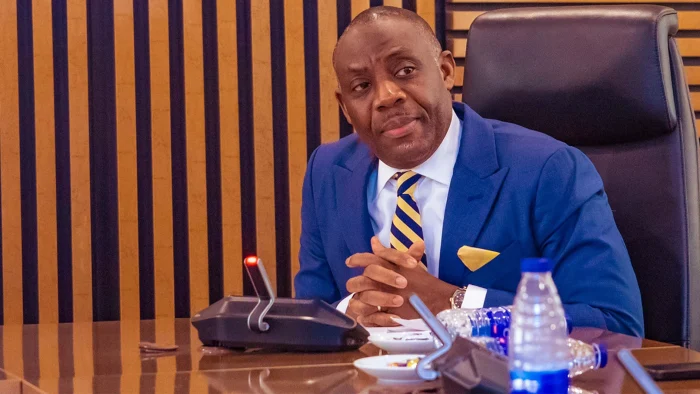
The Minister of Education, Dr Tunji Alausa, gave the assurance on Tuesday in Abuja while unveiling the 2026 agreements between the Federal Government and staff unions in universities, polytechnics and colleges of education.
Alausa said the administration of President Bola Tinubu was determined to end decades of broken promises, recurring industrial disputes and prolonged strikes that have disrupted academic activities across the country.
He stressed that fulfilling government commitments was essential to restoring trust between the government and education workers while ensuring students no longer lose valuable learning time.
“During his campaign, President Bola Ahmed Tinubu promised that a four-year course would be completed in four years. Today, through his leadership, these agreements give practical expression to that pledge: A promise made, a promise kept, and trust restored,” the minister said.
The newly unveiled agreements cover the Consolidated Academic Tools Allowance (CATA) for the Academic Staff Union of Polytechnics (ASUP) and the Colleges of Education Academic Staff Union (COEASU), as well as the Consolidated Non-Teaching Tools Allowance (CONTTA) for non-teaching staff unions across tertiary institutions.
The allowances are scheduled to take effect from January 1, 2026, in accordance with the agreements and applicable implementation guidelines.
FG promises full implementation of agreements
Alausa acknowledged that unveiling the agreements was only the first step, noting that their success would depend on the government’s commitment to implementing the provisions as agreed.
“Let me state clearly, on behalf of the Federal Government: We will fulfil our own part of these historic agreements. We recognise that public confidence will depend on the obligations we honour after this ceremony,” he said.
To prevent future disagreements over implementation, the minister announced plans to expand the existing Implementation and Monitoring Committee (IMC), initially established to oversee the agreement with the Academic Staff Union of Universities (ASUU).
Under the proposed arrangement, the committee will serve as a central monitoring platform for agreements with academic and non-academic staff unions across universities, polytechnics and colleges of education.
Its membership will be expanded to include relevant unions and stakeholders, with responsibilities covering progress monitoring, assessment of implementation milestones, resolution of challenges and periodic accountability reports.
According to Alausa, the committee will track both completed commitments and outstanding obligations to ensure that agreed provisions are implemented within established timelines.
He said the approach would enable the government to identify potential implementation challenges early and address them before they escalate into disputes capable of disrupting academic activities.
The minister also indicated that the government would work towards establishing the committee as a permanent structure.
Minister warns against recurring strikes
Reflecting on the history of industrial disputes in Nigeria’s tertiary education sector, Alausa said agreements reached between successive governments and staff unions had often been undermined by delayed, incomplete or unfulfilled commitments.
He noted that the consequences extended beyond government and union leaders, with students losing valuable academic time, families facing additional financial burdens, and teaching and research suffering repeated setbacks.
Prolonged strikes, he added, had created uncertainty around academic calendars, making it difficult for students to complete their programmes within the prescribed periods.
The minister said the Tinubu administration was determined to reverse the trend by building a system in which agreements were respected and academic activities proceeded without unnecessary interruptions.
He described industrial harmony as essential to educational excellence, explaining that stable academic calendars would help institutions plan effectively, sustain research and allow students to concentrate on their studies.
“We must strengthen early consultation and resolve differences through constructive dialogue, mutual respect and good-faith engagement. Our students and their families must remain at the centre of these efforts,” he said.
Alausa urged government agencies to fulfil their responsibilities diligently, while governing councils and institutional managements were directed to maintain accurate records, comply with implementation guidelines and cooperate fully with the monitoring committee.
He also called on union leaders to keep their members informed and channel emerging concerns through established mechanisms.
FG links staff welfare to education quality
Explaining the importance of the agreements, Alausa said the CATA and CONTTA allowances were designed to support the professional and operational needs of eligible academic and non-academic personnel.
He said the provisions reflected the government’s recognition that the quality of tertiary education depended partly on the welfare, motivation and professional wellbeing of its workforce.
According to him, improving staff welfare must extend beyond financial allowances to include fair treatment, transparent promotion processes, occupational safety and opportunities for career advancement.
He pledged that the Federal Ministry of Education would continue working with relevant agencies, governing councils, institutional managements and unions to create an environment where education personnel could perform their duties effectively.
The minister commended the leadership of ASUP, COEASU and non-teaching staff unions for participating in the negotiations. He also acknowledged the contributions of relevant ministries, departments, agencies and technical teams.
He reserved special praise for the Federal Government Tertiary Institutions Expanded Negotiation Committee, chaired by Malam Yayale Ahmed, crediting the committee’s experience, patience and dedication for helping bring the negotiations to a successful conclusion.
Alausa also acknowledged President Tinubu’s support and guidance, describing the agreements as evidence of the administration’s commitment to education workers and the future of Nigerian students.
Signed copies of the agreements were presented to representatives of academic and non-academic staff unions, including ASUP, COEASU, the Senior Staff Association of Nigerian Universities (SSANU), the Non-Academic Staff Union of Educational and Associated Institutions (NASU), and the National Association of Academic Technologists (NAAT), alongside other unions representing staff in polytechnics and colleges of education.
However, the effectiveness of the agreements will ultimately depend on their timely implementation, particularly the payment of the agreed allowances and the ability of the expanded monitoring mechanism to resolve disputes before they lead to industrial action.
The Federal Government says it hopes the new framework will strengthen accountability, rebuild trust with education workers and help ensure that Nigerian students complete their academic programmes without avoidable delays.