
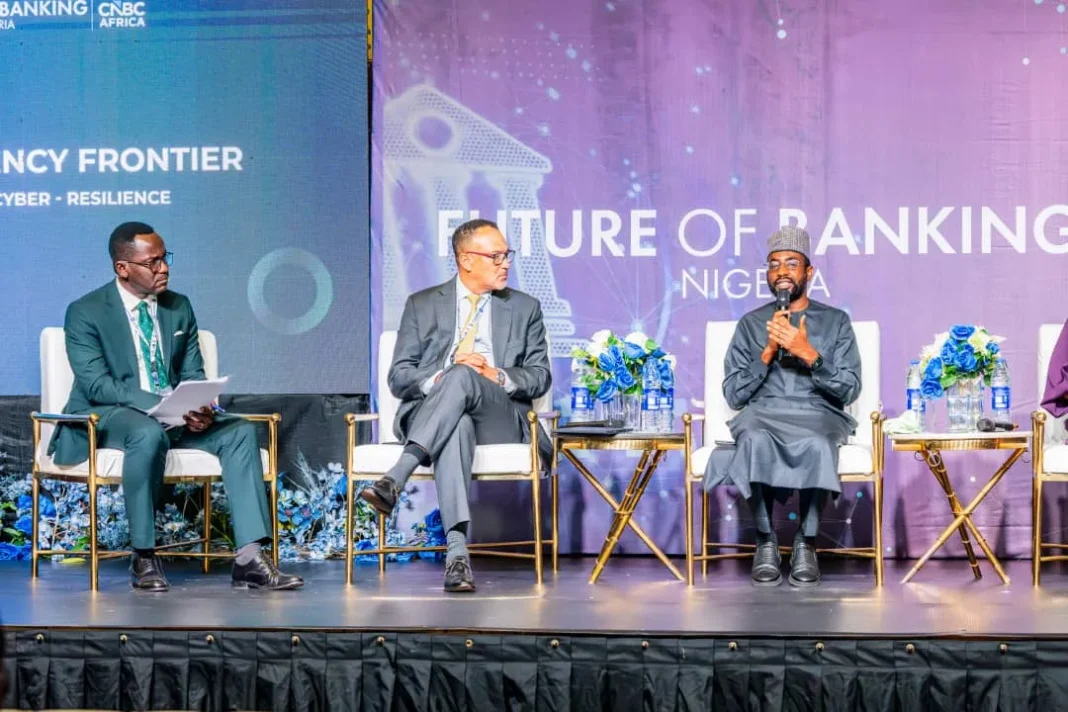

The Director-General of the National Information Technology Development Agency (NITDA), Kashifu Inuwa, has said the future of Nigeria’s banking industry will depend on how effectively financial institutions embrace artificial intelligence (AI), regulatory technology (RegTech), and cyber resilience to strengthen digital trust.
Speaking at the Future of Banking Nigeria Summit organised by CNBC Africa in Lagos, Inuwa explained that the banking sector is entering a new phase where technological innovation and digital security are becoming more important than capital accumulation alone.
During a panel discussion titled “The Efficiency Frontier – AI, RegTech and Cyber Resilience,” he noted that Nigeria’s banking industry has successfully overcome several major reforms over the past two decades, including the 2005 banking consolidation, the 2009 financial sector reforms, and the ongoing bank recapitalisation exercise.
According to him, the industry’s priority has shifted from simply raising capital to ensuring that financial assets are protected, preserved, and sustainably grown in an increasingly digital economy.
“Today’s challenge is no longer about whether banks can raise enough capital, but whether they can secure, preserve, and grow that capital in the digital age. Digital trust has become the backbone of modern banking, and it can only be achieved through resilient technology infrastructure and effective regulatory systems,” Inuwa said.
He stressed that as more banking services move to digital platforms, customers now expect seamless, secure, and uninterrupted access to financial services. This, he said, makes cybersecurity, operational resilience, and reliable digital infrastructure essential to maintaining public confidence in the banking system.
Inuwa described artificial intelligence as a transformative technology that can significantly improve banking operations by boosting productivity, supporting faster and smarter decision-making, increasing operational efficiency, enhancing revenue generation, and delivering more personalised financial services tailored to customer needs.
He also highlighted the growing role of regulatory technology (RegTech), noting that its adoption can help financial institutions automate compliance processes, lower operational costs, improve transparency, strengthen governance, and respond more effectively to evolving regulatory requirements.
The NITDA Director-General concluded that embracing AI, RegTech, and strong cybersecurity frameworks will be crucial for banks seeking to remain competitive and build lasting customer trust as Nigeria’s financial sector continues its digital transformation.