

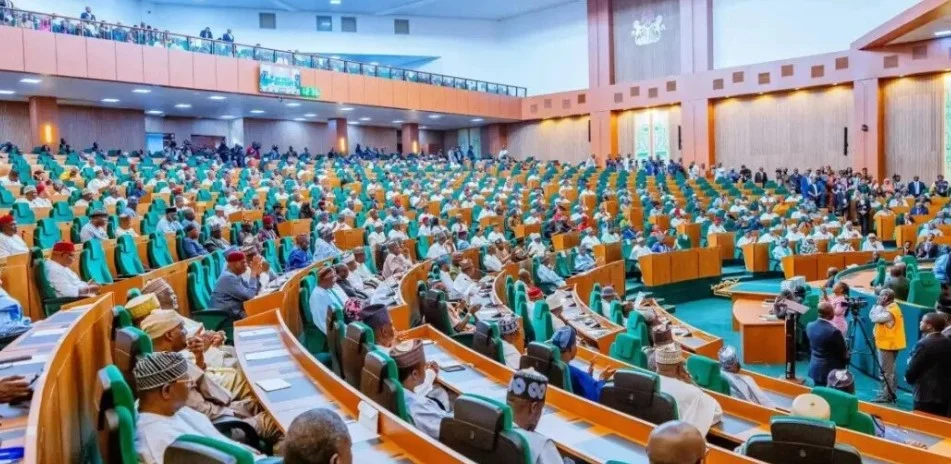

The House of Representatives has issued a final summons to the Minister of Education, Dr. Tunji Alausa, directing him to appear personally before its Committee on Polytechnic and Higher Technical Education on September 17, 2026, over the ongoing investigation into the Federal Government’s Technical and Vocational Education and Training (TVET) programme.
The committee also ordered the Federal Ministry of Education to submit all documents and information relating to the implementation of the TVET programme on or before August 18, 2026.
The resolutions followed an investigative hearing at the National Assembly on Thursday, where lawmakers expressed frustration over the minister’s repeated failure to honour invitations or send a representative to appear before the committee.
Chairman of the committee, Kayode Laguda, said the lawmakers had written to the ministry several times since January 30, 2025, requesting detailed information on the government’s implementation of the TVET programme.
He said the committee’s most recent letter, dated July 30, 2026, again requested relevant documents and invited the ministry to appear before the lawmakers, but neither the minister nor a representative attended.
“We have written several correspondences starting from January 30, 2025, seeking information on the activities of the Technical Vocational Education Training being implemented by the government. The last invitation was on July 30, but the minister is not here, and no representative was sent to the committee,” Laguda said.
The committee chairman described the minister’s absence as unexpected, noting that the committee had previously maintained a cordial relationship with the Ministry of Education.
Laguda further reminded the ministry that Sections 88 and 89 of the 1999 Constitution, as amended, empower the National Assembly to investigate the activities of Ministries, Departments and Agencies as part of its legislative and oversight responsibilities.
The hearing became heated as several lawmakers accused the ministry of failing to cooperate with the investigation.
A committee member, Rabiu Yusuf, described the minister’s repeated absence as disrespectful to the National Assembly and moved a motion calling for a vote of no confidence.
“This communication was neither acknowledged nor responded to. Information requested by the committee was not provided. We can rightly assume that there is a high level of disrespect to the institution of the legislative body by the executive, particularly the Minister of Education,” Yusuf said.
Another lawmaker, Bayo Adepoju, described the minister’s failure to appear as “a direct affront to parliament,” arguing that Nigerians deserved greater transparency over the implementation of the TVET programme.
However, some lawmakers urged restraint, proposing that the minister be given one final opportunity to comply before punitive measures are considered.
Paul Kalejaiye appealed to the committee to issue a final ultimatum and set a fresh date for the minister’s appearance.
Adepoju subsequently supported the approach, while maintaining that the committee had the right to formally express its displeasure over the minister’s conduct.
Laguda also backed the decision to give the minister another opportunity, saying his previous engagements with Alausa did not suggest that the minister would deliberately ignore the committee.
“I’ve had engagements with the minister in the past. I don’t see him as someone who would deliberately do this. Maybe there are reasons for it, but whatever is responsible, this definitely should not happen again,” he said.
Following deliberations, the committee directed the Ministry of Education to submit all previously requested documents and information on the TVET programme by August 18.
The investigative hearing was then adjourned until September 17, 2026, when Minister Tunji Alausa is expected to appear personally before the committee.
Announcing the resolution, Laguda said the ministry must provide comprehensive records covering the TVET programme from its inception to date.
The TVET programme is one of the Federal Government’s major initiatives aimed at expanding technical and vocational education, equipping young Nigerians with industry-relevant skills, reducing unemployment and addressing the country’s skills gap.
The House committee’s investigation is expected to examine the programme’s implementation, funding, execution and overall effectiveness as part of the National Assembly’s constitutional oversight responsibilities.