
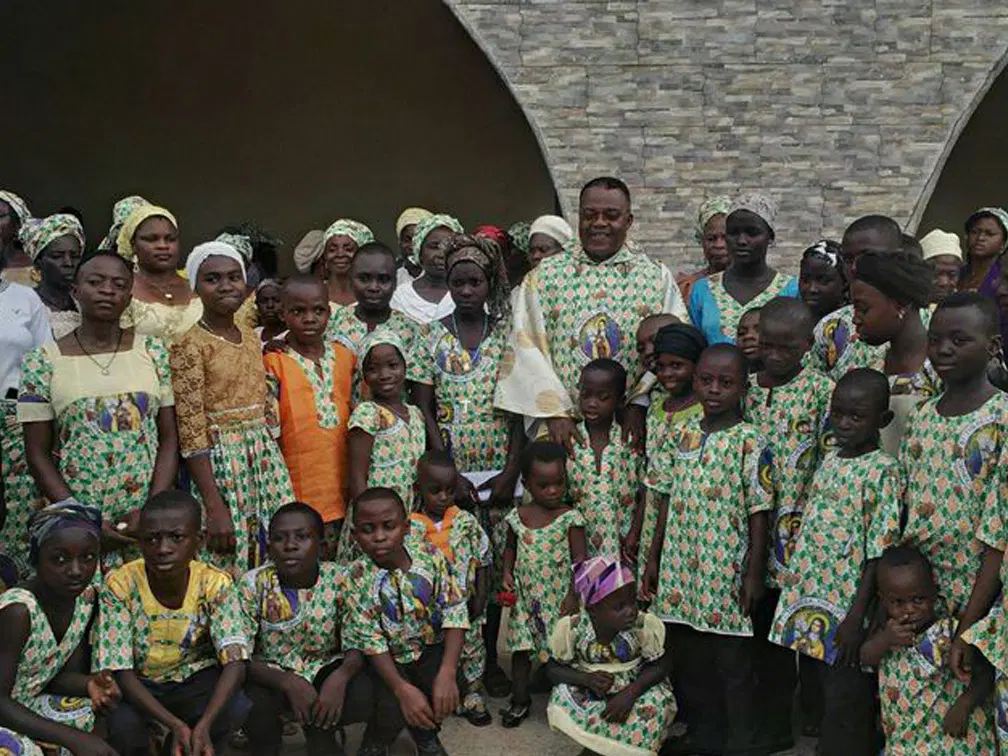

Children of Rural Africa (CORAfrica), a non-profit organisation founded by Fr. Peter Obele Abue, is strengthening community development efforts across rural Nigeria through integrated programmes focused on education, healthcare, agriculture, and economic empowerment.
Established in 2006 while Fr. Abue was pursuing a doctorate in International Development at Cornell University in Ithaca, New York, CORAfrica was inspired by the stark development disparities between developed and developing nations. The organisation was created to complement his pastoral mission by tackling poverty through sustainable, community-driven development initiatives.
Later that year, CORAfrica secured 501(c)(3) non-profit status in the United States, enabling it to launch development projects in Nigeria. Following Fr. Abue’s return to Nigeria in 2009, the organisation expanded its network of volunteers, donors, and development partners, particularly from the United States, to support its growing humanitarian work.
Over the years, CORAfrica has collaborated with organisations such as Abode for Children Inc. in Pennsylvania and other international partners to implement projects including St. Joseph School and Orphanage, CORAfrica Farms, the Ogoja Diocesan Agriculture and Investment Programme (ODAIP), and John Stilley Secondary School in Victoria, Cross River State.
The organisation has also strengthened its presence through registration with relevant government agencies while extending its interventions beyond Cross River State to underserved rural communities, internally displaced persons (IDP) camps, and refugee settlements in neighbouring Benue State.
Community Education Centre Model
At the heart of CORAfrica’s intervention is its Community Education Centre (CEC) model, an integrated approach that combines education, healthcare, agriculture, and economic empowerment. According to the organisation, the model was developed after years of experience showed that children’s academic performance improves when schools are supported by strong community-based systems.
The education component provides access to primary and secondary education, tertiary education support, and vocational training. In addition to formal learning, young people are equipped with practical vocational and entrepreneurial skills that promote self-reliance and long-term economic independence.
Strengthening Livelihoods and Healthcare
CORAfrica’s livelihood programmes focus on improving agriculture, healthcare services, and economic opportunities within rural communities. Through demonstration farms, medical centres, access to clean water, and vocational training centres, the organisation seeks to enhance food security, improve public health, and create sustainable sources of income for families.
The organisation says its initiatives align with several United Nations Sustainable Development Goals (SDGs), including poverty reduction, zero hunger, gender equality, decent work, and reduced inequalities. Its integrated development strategy is designed to improve access to quality education, healthcare, clean water, food security, and skills development for vulnerable households.
Empowering Women and Rural Communities
A major focus of CORAfrica’s work is the empowerment of rural women, who often shoulder significant household responsibilities despite facing limited economic opportunities.
Through targeted livelihood programmes, agricultural support, and community development initiatives, the organisation aims to expand women’s access to productive resources, strengthen women-led enterprises, and promote inclusive economic participation that benefits families and communities alike.
By combining education, healthcare, and sustainable livelihood programmes, CORAfrica continues to drive community-led development and improve the quality of life for vulnerable children and rural populations across Nigeria.