

The Academic Staff Union of Universities, University of Jos branch, has raised concerns over the Federal Government’s slow implementation of the 2025 agreement reached with the union, warning that continued delays could lead to another nationwide strike in public universities.
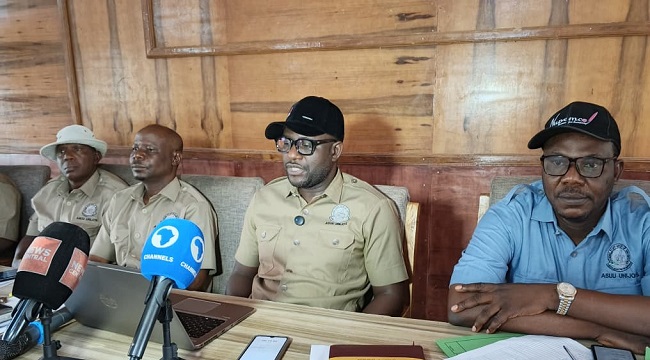
Speaking during a press briefing at the union’s secretariat at the University of Jos on Monday, ASUU leaders said lecturers across the country were becoming increasingly frustrated over what they described as inconsistent compliance with the agreement signed on December 23, 2025.
The union disclosed that its National Executive Council meeting, held at Modibbo Adama University on May 9 and 10, reviewed the implementation process and expressed dissatisfaction with the Federal Government’s level of commitment.
ASUU accused the government of failing to inaugurate the Implementation Monitoring Committee (IMC), a body expected to supervise and ensure proper execution of the agreement. According to the union, the absence of the committee has resulted in selective implementation of critical welfare packages, including the Consolidated Academic and Tool Allowance (CATA), Earned Academic Allowance (EAA), Professorial Allowance, and other responsibility allowances.
The union noted that while institutions such as Sa’adu Zungur University and Ekiti State University have partially complied with aspects of the agreement, many universities are yet to follow suit.
ASUU also criticised the Federal Government over the creation of the National Research and Innovation Development Fund (NRIDF), announced by the Minister of Education, Tunji Alausa, without consultation with the union. The lecturers questioned the proposed foreign currency-based funding model, warning that it could expose Nigeria’s education sector to external influence.
The union further highlighted unresolved issues affecting lecturers, including unpaid arrears of the 25/35 per cent wage award, promotion arrears, withheld salaries linked to the 2022 strike, salary deductions associated with the Integrated Payroll and Personnel Information System (IPPIS), and unremitted third-party deductions.
ASUU maintained that the “no work, no pay” policy used during the 2022 strike was unfair, insisting that lecturers continued carrying out research and community service during the industrial action.
Concerns were also raised about the welfare of retired academics, especially those in state-owned universities, as the union called on President Bola Ahmed Tinubu to address lingering pension arrears and delays in pension harmonisation.
In addition, ASUU criticised recent education policies introduced by the Federal Government, including the reversal of the mother-tongue teaching policy and the proposed Transnational Education partnership involving Coventry University, which it described as a neo-colonial academic arrangement.
The union also opposed plans to scrap some university courses and rejected proposals to introduce titles such as “Professor of Practice” and “Diaspora Professor,” arguing that such decisions threaten university autonomy.
Beyond the education sector, ASUU expressed worries over rising insecurity, economic hardship, unemployment, and political tension ahead of the 2027 general elections, warning that public frustration continues to grow nationwide.
The union warned that failure to fully implement the agreement and clear outstanding entitlements could trigger fresh industrial action across Nigeria’s public universities.