
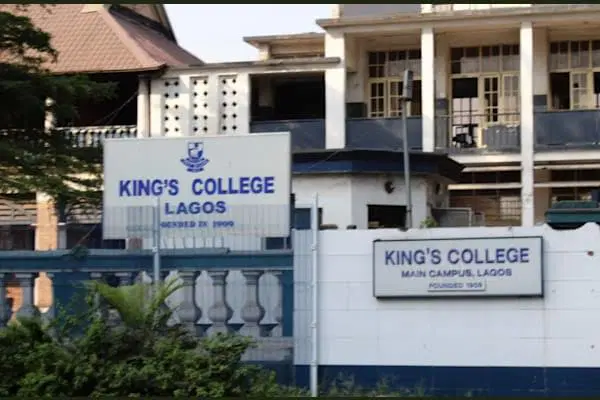

The controversy surrounding the Federal Government’s decision to concession King’s College, Lagos, to the King’s College Old Boys’ Association (KCOBA) has intensified, with parents and other stakeholders reportedly mobilising for a mass protest against the arrangement.
The Chairman of the school’s Parent-Teacher Association (PTA), Peter Oluwaseye, said the planned protest was necessary because of widespread opposition to the concession among parents, civil servants and members of the surrounding community.
According to him, King’s College is a public institution and should not be treated as the property of its former students.
“Parents are not in support of the move. Senior civil servants are also saying no to it. The community is also not in support. Old boys should not see the college as their property,” he said.
Oluwaseye argued that KCOBA should support the institution through donations and other forms of assistance rather than seek a governance arrangement that could amount to taking control of the school.
He added that the association would not succeed in taking over the institution, insisting that the school’s teachers and public character should be protected.
Why KCOBA Supports the Concession
The controversy followed the announcement by KCOBA President, Alhaji Kashim Ibrahim-Imam, that the Federal Government had approved the concession of the 116-year-old institution to the old boys’ association.
KCOBA has also launched a ₦100 billion endowment fund to support the transformation of the school.
Among the early contributors were First Lady Oluremi Tinubu, who donated ₦10 million, while Ibrahim-Imam pledged ₦1 billion. Former Board of Trustees Chairman, Chief Philip Asiodu, and the association’s new Board Chairman, Alhaji Femi Okunnu, each donated ₦100 million.
The association says the initiative is intended to support infrastructure renewal, teacher development, digital technology, scholarships, innovation, research and student welfare.
‘It Is Not Privatisation’ — KCOBA
Ibrahim-Imam has sought to reassure stakeholders that the arrangement does not amount to the sale or privatisation of King’s College.
He described it instead as a new governance framework through which KCOBA would work with the government to restore and modernise the institution while maintaining its public ownership.
He said the concession represents a significant moment in the history of King’s College, which was established in 1909 and has produced generations of prominent Nigerians across public service, business, academia, medicine, engineering, the military, judiciary and other sectors.
According to him, the initiative followed years of advocacy and engagement by former students concerned about the deterioration of the school’s infrastructure and systems.
The Bigger Question
At the centre of the controversy is a fundamental question: Can private-sector or alumni-led management improve public schools without undermining their public character and accountability?
While KCOBA argues that the concession provides an opportunity to inject resources, modernise facilities and improve learning outcomes, parents and other stakeholders are demanding greater clarity over the governance structure and the implications for the institution’s future.
The unfolding dispute highlights a broader challenge facing Nigeria’s public education system—how to mobilise private and alumni support for struggling institutions while ensuring that public schools remain accessible, accountable and protected from undue control.
As parents prepare to protest, the King’s College concession debate could become an important test of how Nigeria balances public ownership, alumni intervention, institutional autonomy and the urgent need to modernise its schools.