

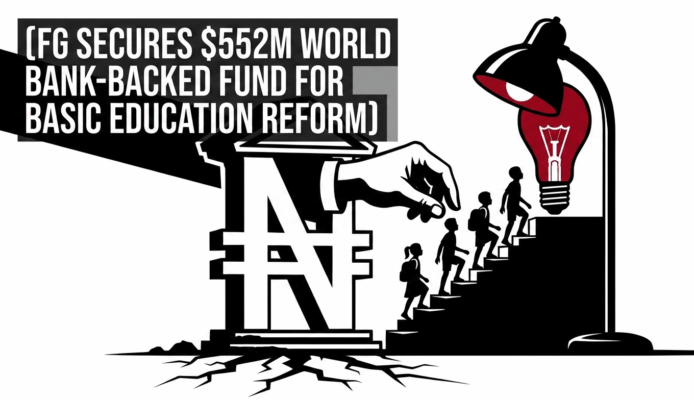

In a major move to overhaul the country’s schooling system, the Federal Government of Nigeria has unlocked $552 million in funding through the HOPE-EDU programme. Co-financed by the World Bank and the Global Partnership for Education, this initiative marks the fastest mobilization of education financing in Nigeria’s history, reaching activation in just 12 months.
Transforming Foundational Learning
The funding is a core pillar of the Nigeria Education Sector Renewal Initiative (NESRI). It aims to move beyond simple enrollment by focusing on the quality of what children actually learn. Key objectives include:
-
Foundational Literacy & Numeracy: Strengthening the “basics” for primary students.
-
Expanded Access: Reducing the number of out-of-school children and improving equity.
-
Institutional Accountability: Ensuring states use funds transparently to achieve measurable results.
-
Teacher Effectiveness: Investing in training and support to improve classroom outcomes.
A “Landmark Achievement”
Minister of Education, Maruf Tunji Alausa, hailed the funding as a turning point for the sector. He noted that the speed of the fund’s activation reflects a rare level of coordination between federal and state governments.
“This reflects clarity of vision and our unwavering commitment to delivering measurable results for Nigerian children,” Alausa stated, linking the move to President Bola Ahmed Tinubu’s broader human capital development agenda.
By the Numbers: Education Funding Surge
The government’s focus on education is reflected in recent budget trends. According to the Ministry of Education, federal allocation to the sector has surged by over 302% since 2022.
The “HOPE” Framework
The HOPE-EDU programme isn’t an isolated project; it is part of a comprehensive reform suite designed to improve public service delivery across the board. The framework includes:
-
HOPE-EDU: Basic education and learning outcomes.
-
HOPE-Governance: Public financial management and transparency.
-
HOPE-Primary Health Care: Service delivery in the medical sector.