

France School Crisis Deepens: Up to 500 High Schools Set for Partial or Full Closure
Up to 500 high schools across France are expected to be partially or completely closed on Monday as a growing wave of student protests over school conditions continues to disrupt the country’s education system.
French Education Minister Edouard Geffray said Sunday that lessons would be “totally or partly suspended” in between 400 and 500 high schools because security conditions could not be guaranteed.
The closures come as authorities prepare for another major round of demonstrations scheduled for Tuesday by student protest organisers.
Geffray said the number of schools affected on Monday would be similar to the figure recorded on Friday but stressed that authorities expected a “partial, progressive return to lessons” as conditions improve.
Students Protest School Conditions
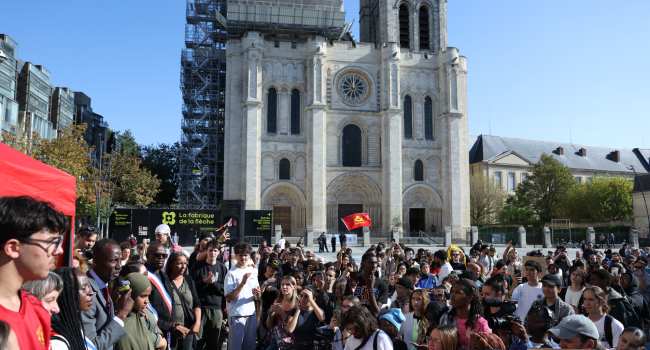
The protests, which began at a Paris school on September 17, have expanded into a nationwide movement.
Students at French high schools, known as lycées, have raised concerns over teacher shortages and frequent absences, excessively long school days, deteriorating facilities and other problems affecting their education.
What began as a school-based protest has increasingly developed into a wider confrontation involving students, government authorities and security forces.
In some locations, demonstrations have resulted in clashes between teenagers and police, with officers using tear gas and batons to disperse protesters.
24 Schools Reportedly Damaged
According to Geffray, 24 schools have been “burnt or ransacked” since the movement began.
The minister described the decision to close hundreds of schools as primarily a security measure designed to protect students and education workers.
He also alleged that political activists, particularly those associated with the far left, had infiltrated the student movement and contributed to violent incidents.
“There are activists—particularly from the far-left—who have infiltrated the high school student movement, hijacked it from the students themselves, and engaged in extreme violence,” Geffray said.
He added that the situation posed risks to both students and staff, noting that 78 education workers had been injured.
Government Faces Pressure as Protests Continue
Protest organisers have called for demonstrations to continue on Tuesday, arguing that the government has failed to respond with sufficient “concrete measures” to address students’ concerns.
The scale of the unrest has also resulted in thousands of arrests.
More than 5,000 people, around 85 percent of them minors, have reportedly been arrested since the beginning of the movement.
However, the government’s handling of the demonstrations has attracted criticism from rights groups, which have accused security forces of using excessive force.
Teacher Attacked During Protest
Tensions escalated further after a 16-year-old was detained on Sunday in connection with an attack on a teacher in the southern town of La Ciotat.
The 59-year-old teacher was reportedly doused with gasoline and struck during a protest near a high school on Friday.
A video circulating online appears to show a masked person dressed in black throwing liquid at the teacher while a nearby tree burns.
The incident has intensified concerns over the safety of teachers and students during the demonstrations.
In another incident, footage emerged showing a group of youths beating and kicking a police officer who had fallen to the ground in Belfort, eastern France.
Two Bulgarian teenagers, aged 15 and 17, were arrested and placed under investigation over suspected aggravated violence, according to prosecutors.
One of the teenagers, whom the officer had reportedly attempted to arrest before the assault, has also filed a complaint alleging attempted murder through his lawyer.
Rights Groups Warn Against Heavy-Handed Policing
While the government has focused on security concerns, rights organisations have urged authorities to protect students’ right to peaceful protest.
Amnesty International’s France branch criticised what it described as “disproportionate police violence” during the demonstrations and called for students to be allowed to express their grievances without excessive force.
The organisation said young people should be able to exercise their rights without fear of being subjected to tear gas, batons or arbitrary detention.
Interior Minister Laurent Nunez, however, rejected the suggestion that security forces were targeting young protesters.
He said police were not “cracking down on young people” but were instead protecting students who wanted to peacefully express their demands.
A Growing Test for France’s Education System
With hundreds of schools facing disruption and further protests planned, the crisis is becoming a major test for France’s education and public-security authorities.
At the centre of the dispute are students demanding better learning conditions, while the government faces the challenge of responding to those concerns without allowing violence to threaten the safety of students, teachers and security personnel.
For now, the planned Monday closures offer a temporary response to the security situation. But unless the underlying grievances are addressed, the disruption could continue to place increasing pressure on France’s education system.