
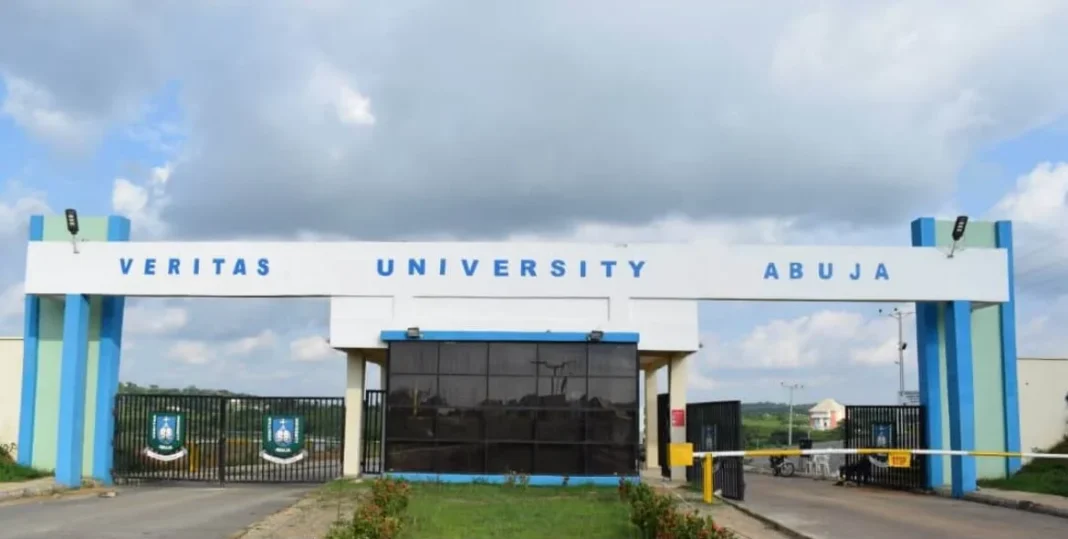

Veritas University Abuja has unveiled plans for a ₦1.3 billion Skills and Innovation Hub aimed at equipping students with practical, industry-relevant skills to enhance their employability and entrepreneurial potential.
The project comes as concerns continue to grow over graduate unemployment and the widening skills gap in Nigeria. University officials say the initiative is designed to ensure students graduate with both academic qualifications and hands-on experience needed to succeed in today’s competitive job market.
Speaking during the groundbreaking ceremony at the university’s campus on Monday, Vice-Chancellor Prof. Hyacinth Ichoku described the facility as a strategic investment that will empower students to become innovators, entrepreneurs, and job creators.
According to him, the Skills and Innovation Hub is expected to be completed by January 2027 and will serve as the university’s central platform for practical learning, offering training in technology, entrepreneurship, fashion design, music, creative arts, and innovation.
“The project represents a major milestone for the university. We want students with diverse talents to develop and showcase their abilities using modern facilities. No student should graduate from Veritas University without acquiring a practical skill,” Ichoku said.
He emphasized that universities must move beyond awarding certificates and focus on producing graduates with competencies that meet the demands of employers and the evolving global economy.
“Academic qualifications alone are no longer enough. Students need practical skills that enable them to solve real-world problems and create employment opportunities. Tomorrow belongs to those who possess relevant skills,” he added.
The Vice-Chancellor also revealed that Veritas University has established partnerships with global technology companies, including Cisco and Microsoft, enabling students to earn internationally recognized professional certifications alongside their academic degrees.
According to him, the new Skills Hub will strengthen these existing programmes by providing modern facilities where students can receive professional training and develop innovative solutions.
The facility will complement the university’s Innovation and Engineering Centre, allowing students from various disciplines to transform ideas into practical products and services using advanced digital technologies.
Ichoku further disclosed that the university hosts an annual Skills Boot Week, bringing together industry experts, innovators, and professionals from Nigeria, other African countries, and the United Kingdom to mentor students and expose them to emerging technologies and entrepreneurial opportunities.
He encouraged students to pursue their passions regardless of their academic disciplines, noting that learners in fields such as Medicine and Nursing have successfully developed technology-based innovations.
The Vice-Chancellor also urged Nigerian youths to reject fraudulent means of making money and instead embrace entrepreneurship, innovation, and skills development as sustainable pathways to success.
Speaking at the event, philanthropist and project donor Dr. Josephat Okoye said his support for the initiative was inspired by his desire to contribute to the development of future leaders.
He praised the university’s leadership and pledged continued financial support, revealing that he has already committed more than ₦200 million toward the construction of the Skills and Innovation Hub.
According to Okoye, investing in young people is essential to building a stronger future for Nigeria.
The establishment of the Skills and Innovation Hub aligns with broader efforts by the Federal Government to improve graduate employability through expanded investment in Technical and Vocational Education and Training (TVET), digital literacy, innovation, and entrepreneurship.
Education stakeholders have consistently identified the mismatch between university education and labour market needs as a major challenge. Through initiatives like this, institutions are increasingly integrating practical skills training into academic programmes to produce graduates capable of driving innovation, creating jobs, and contributing to Nigeria’s economic development.