
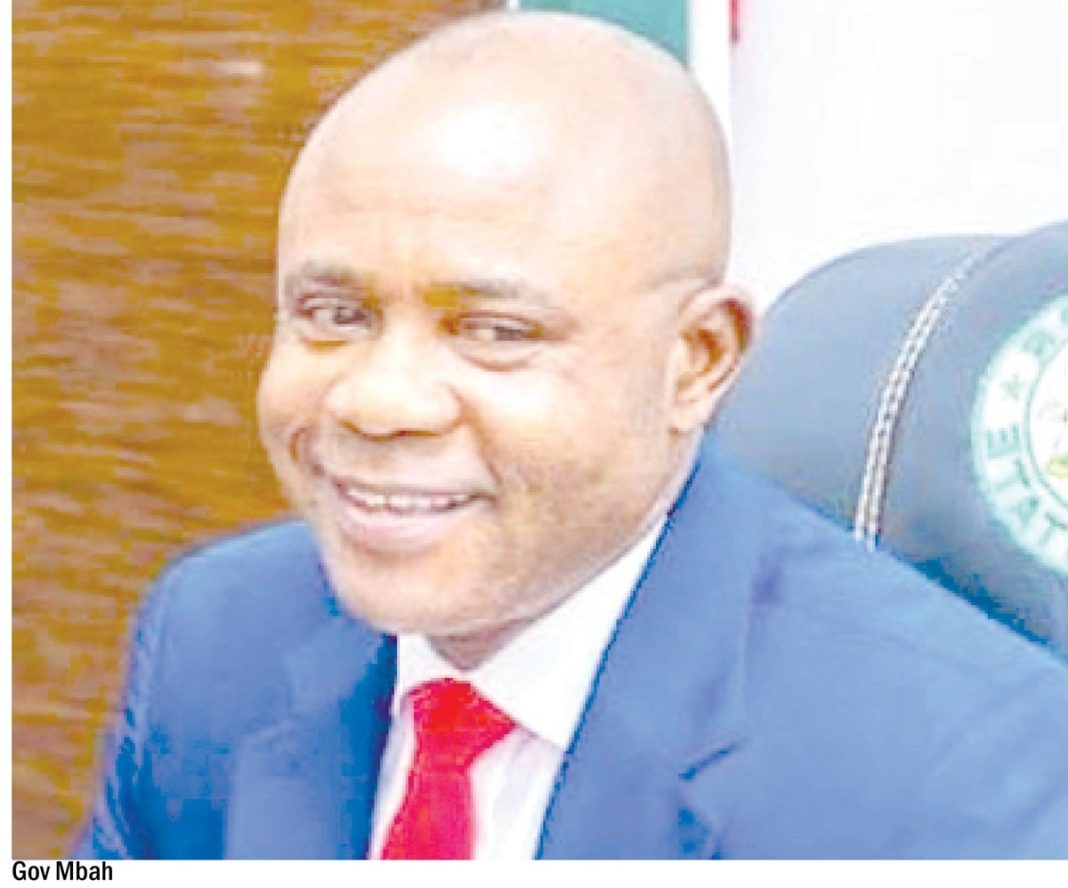

Governor Peter Mbah of Enugu State has reaffirmed his administration’s commitment to investing heavily in education, security, healthcare, agriculture, and infrastructure as part of a broader strategy to drive economic growth, eradicate poverty, and position Enugu as a leading destination for investment and tourism in Nigeria.
Speaking during an interactive session with journalists on the Renewed Hope National Media Tour, Mbah explained that education remains one of the most powerful tools for addressing societal challenges, including crime and unemployment.
Security as the Foundation of Development
The governor described security as a critical pillar of development, noting that no meaningful investment can thrive in an insecure environment.
According to him, the state has deployed advanced technology through a state-of-the-art Command and Control Centre to monitor activities across Enugu and secure major entry and exit points.
“We identified nine official gateways into the state and deployed technology to monitor movements. Our goal is to prevent crime before it occurs and respond swiftly whenever there is a security breach,” he said.
Mbah disclosed that the state’s Distress Response Squad (DRS) is equipped with Artificial Intelligence-powered cameras, body cameras, and monitoring devices that allow real-time surveillance and performance tracking of security personnel.
International Hospital to Boost Investment and Healthcare
The governor said the construction of an international-standard hospital aligns with his administration’s vision of transforming Enugu into a preferred destination for business and investment.
He explained that quality healthcare is one of the key considerations for investors when choosing where to establish businesses.
“Our vision is to grow Enugu’s economy from $4.4 billion to $30 billion within eight years, eradicate poverty, and make the state the top destination for tourism, business, and living. Healthcare plays a significant role in achieving these goals,” Mbah stated.
He added that the state aims to tap into Nigeria’s multi-billion-dollar medical tourism market by providing world-class healthcare services locally.
Tourism and Aviation Expansion
To strengthen tourism and improve accessibility, the governor highlighted ongoing investments in tourism infrastructure, including the development of major attractions such as Africa’s longest zipline, a cable car project, and religious tourism sites.
Mbah noted that attracting three million visitors annually requires significant improvements in air transportation.
“When we assumed office, only about four or five flights landed in Enugu daily. Today, we record nearly 20 flights daily, but our target is 100 flights per day,” he said.
The governor also revealed that the state facilitated the concession of the Akanu Ibiam International Airport through private sector collaboration, describing it as a landmark achievement supported by President Bola Ahmed Tinubu.
Education: Building Future Problem Solvers
On education, Mbah disclosed that Enugu State has consistently allocated about 33 percent of its budget to the sector over the past three budget cycles.
The state has constructed over 7,000 classrooms and established 267 Smart Schools equipped with robotics laboratories, Artificial Intelligence facilities, ICT centres, and 3D printing technology.
Beyond infrastructure, the governor emphasized the importance of teacher quality and innovative learning methods.
“We established the Centre for Experiential Learning and Innovation to train educators and improve teaching standards. We have also moved away from rote learning to experiential learning, where students learn through practical activities and problem-solving.”
According to him, the goal is to nurture a generation of innovators rather than students who simply memorize classroom lessons.
“We invest in education because it is the most effective way to prevent the breeding of criminals. When young people acquire relevant knowledge and skills, they become productive citizens and contributors to society,” he said.
Tinubu’s Reforms Increased States’ Capacity
Mbah credited President Tinubu’s economic reforms for providing states with greater financial resources to undertake large-scale development projects.
He noted that increased allocations from the Federation Account have enabled sub-national governments to invest more significantly in infrastructure, healthcare, education, and other critical sectors.
“The scale of projects we are executing today would have been difficult without the bold reforms introduced by President Tinubu. These reforms have strengthened the financial capacity of states and empowered us to deliver on our mandates,” he said.
Agriculture as a Business Opportunity
The governor also highlighted agriculture as a major driver of economic growth beyond food security.
He disclosed that the state is developing over 260 farm estates designed to help smallholder farmers transition from subsistence farming to mechanized agriculture.
The initiative includes access to tractors, modern farming equipment, extension services, storage facilities, and agro-processing centres.
According to Mbah, more than 18,000 registered farmers will benefit from the programme, which aims to increase productivity, create jobs, and strengthen the agricultural value chain.
“Our development model is inclusive. We are ensuring that every community benefits from investments in education, healthcare, agriculture, and infrastructure,” the governor said.
Vision for a Prosperous Enugu
Governor Mbah reiterated that his administration’s long-term vision is to build a secure, prosperous, and investment-friendly Enugu State through strategic investments in human capital development, technology, healthcare, tourism, and agriculture.
He maintained that education remains at the heart of this vision, describing it as the strongest weapon against poverty, unemployment, and crime.