
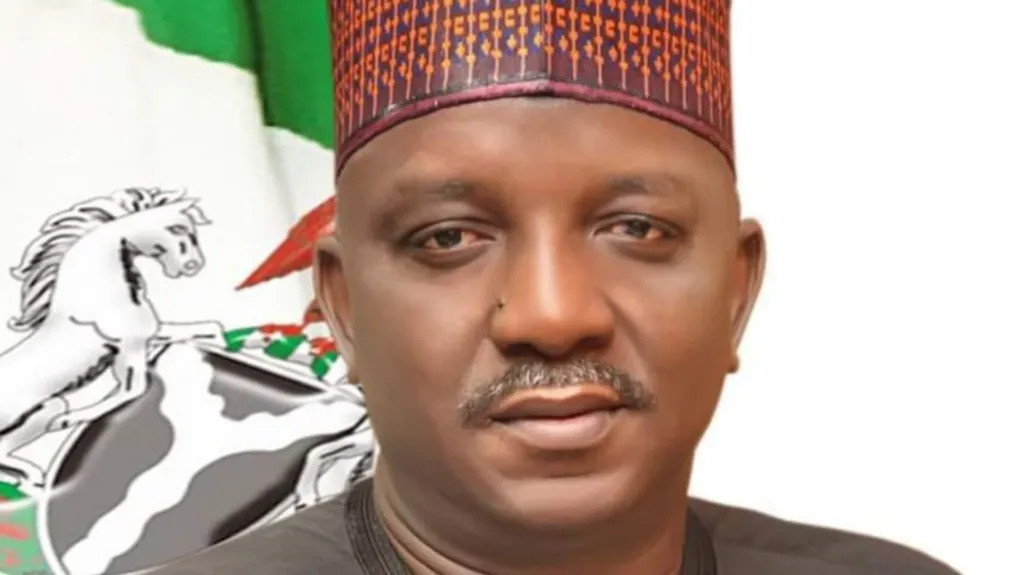

A former Nigerian Minister of Power, Saleh Mamman, has been sentenced to 75 years imprisonment after being convicted of laundering 33.8 billion naira ($24.7 million), in one of the country’s rare high-profile corruption convictions.
The Federal High Court in Abuja found Mamman guilty on 12 counts related to money laundering and the diversion of public funds tied to government power projects. Prosecutors said the former minister used private companies to move funds meant for the construction of power infrastructure across the country.
Mamman, 68, was sentenced in absentia on Wednesday after authorities said he could no longer be located. According to the Economic and Financial Crimes Commission (EFCC), the former minister has remained “without trace” since the court delivered its judgment last week.
Earlier this week, the court issued a warrant for his arrest.
The former minister served under ex-President Muhammadu Buhari between 2019 and 2021, during an administration that repeatedly pledged to fight corruption in public office.
Before his dismissal in a cabinet reshuffle by Buhari, Mamman had overseen Nigeria’s power ministry at a time when the country continued to battle severe electricity shortages despite huge government spending in the sector.
Just weeks before his sentencing, Mamman publicly declared his intention to contest the 2027 governorship election in Taraba State under the ruling All Progressives Congress (APC).
In a statement shared on social media, he announced that he had obtained the party’s nomination and expression of interest forms, describing the move as part of his commitment to serving the state.
During Wednesday’s ruling, the court also ordered the former minister to refund 22 billion naira linked to the fraudulent transactions.
The case forms part of a broader anti-corruption campaign by the EFCC targeting former government officials accused of financial misconduct.
Recent investigations have also involved former Attorney General Abubakar Malami and former Humanitarian Affairs Minister Sadiya Umar Farouq, although both have denied wrongdoing.
Mamman’s conviction has renewed public frustration over Nigeria’s prolonged electricity crisis. Despite being one of Africa’s leading energy producers, the country continues to experience frequent power outages that affect homes, businesses, and industries.
Millions of Nigerians still depend on fuel-powered generators for electricity, while rising fuel costs continue to worsen economic hardship across the country.