

Africa’s policymakers, financiers, and private sector leaders have a direct stake in the quality of the continent’s foundational education. Africa’s greatest asset is its children. By 2050, one in every three young people in the world will be African, making the continent central to the future of the global workforce. Whether this demographic reality becomes a powerful economic dividend or a missed opportunity depends on decisions made today.
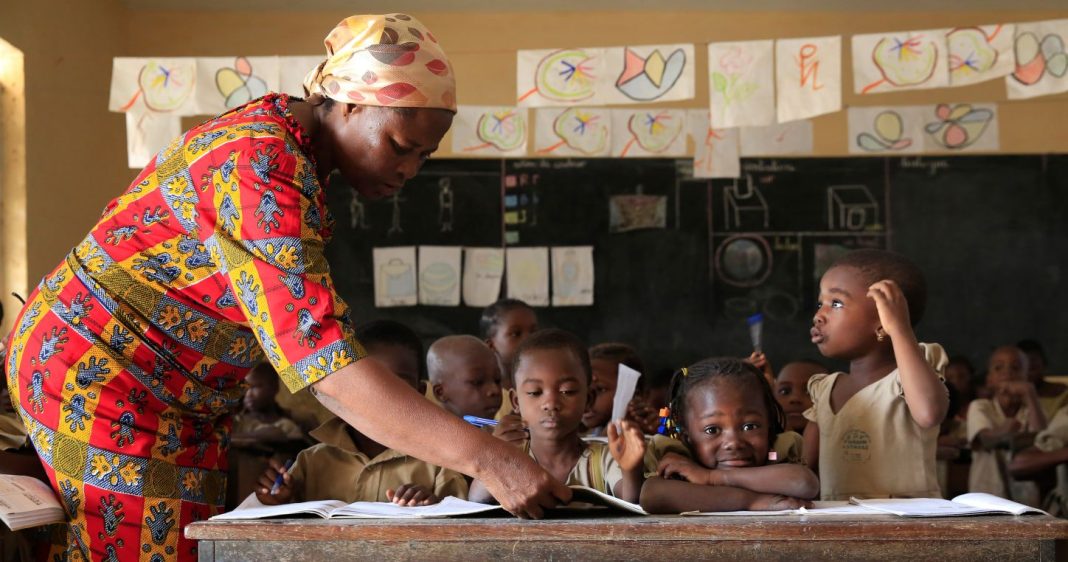
Yet the challenge is stark. Across much of Africa, foundational learning outcomes remain unacceptably low. Too many children complete early grades without the ability to read a simple sentence or solve basic mathematics problems. This is not only a learning crisis; it is a crisis of opportunity, productivity, and human dignity.
The good news is that solutions are known and affordable. Evidence consistently shows that structured pedagogy—combining effective teacher training, high-quality learning materials, and regular instructional coaching—delivers strong, measurable gains in literacy and numeracy at scale. Strengthening foundational skills is one of the few areas in education where what works is clear.
The economic case is equally compelling. A child’s ability to read and do basic maths at age seven directly shapes their productivity as a young adult. Africa is projected to record higher growth rates than much of the developed world in the near term, but sustained growth over the next 10 to 15 years will depend on the skills of today’s children. Without strong foundations, future growth will stall.
Critically, the cost of action is modest. Implementing proven foundational learning programmes typically costs about $5–$6 per child per year—roughly 1–2 per cent of annual education spending in most African countries. The returns, however, are substantial: improved learning outcomes, higher lifetime earnings, and long-term economic gains estimated at many times the initial investment. Early literacy and numeracy outperform nearly all other education investments in terms of long-term impact.
Fiscal pressures are real. Many African governments face rising debt burdens, and education budgets are often consumed by salaries, leaving little room for reforms that improve learning quality. Weak reporting systems and inequitable spending further widen learning gaps between urban and rural, rich and poor. These constraints make smarter spending—not higher spending—the priority. Approaches such as outcome-based budgeting can link resources directly to learning results, improving accountability and equity.
The risk of inaction is far greater than the cost of reform. Each year of delay sends another cohort of children through school without the skills they need, resulting in lost productivity and rising inequality. Short-term, donor-funded pilots are not enough. Governments must lead—scaling evidence-based reforms and embedding them into education systems that endure beyond projects and political cycles.
Foundational learning should be treated as a core economic and jobs strategy, not a social afterthought. No country can industrialise, innovate, or grow without a literate and numerate workforce. Investments in teacher development, quality learning materials, instructional coaching, and aligned curricula are practical, proven strategies already delivering results. What is needed now is ambition, scale, and coordination across education, finance, and labour systems.
The bottom line is simple: you are only seven once. Learning is not a luxury. Ensuring that every child can read and do basic maths by age 10 unlocks pathways to further education, skills training, and participation in modern economies. Africa’s future will be shaped not by the size of its youth population, but by what its young people are able to do, build, and imagine. The real question is not whether Africa can afford to invest in foundational learning—but whether it can afford not to.