
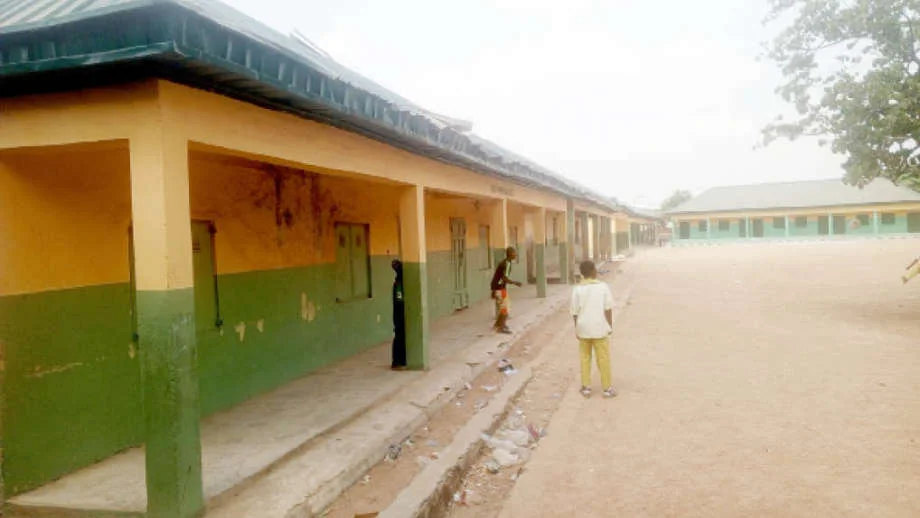

Public education in the Federal Capital Territory has been thrown into turmoil as over 700 government schools shut down indefinitely, coinciding with the start of the 2026 national examination season.
The Nigeria Union of Teachers (NUT), FCT wing, commenced the strike on Monday, April 20, 2026, after several ultimatums to authorities expired without resolution. The action affects all six area councils, leaving thousands of students stranded at a critical academic moment.
At the heart of the crisis are unresolved welfare issues, including the delayed payment of 60% outstanding entitlements owed to teachers by Area Council chairmen. The union is also demanding the removal of the controversial “no vacancy” policy, which has stalled career progression for qualified educators, and the full implementation of the 2025 ministerial committee report on teacher welfare.
The strike comes at a particularly sensitive time, as major national exams are already underway. The 2026 Basic Education Certificate Examination (BECE), commonly known as Junior WAEC, began the same day the strike was declared, immediately disrupting schedules for junior secondary students.
Even more concerning, senior secondary examinations organized by the West African Examinations Council and the National Examinations Council are set to commence, with practical papers like Food & Nutrition and Home Management kicking off on April 21.
This year’s transition to Computer-Based Testing (CBT) for WAEC objective papers adds another layer of uncertainty. With teachers and technical supervisors absent from public schools, the ability to conduct these digital exams smoothly is now in serious doubt.
While candidates in private schools are expected to proceed with exams as scheduled, the shutdown of public schools risks widening the educational gap between public and private students in the FCT.
The NUT has advised parents to keep their children at home for safety reasons until the situation is resolved, further deepening concerns over lost learning time and exam readiness. Attention is now firmly on Nyesom Wike and Area Council leaders to urgently address the impasse. Without swift intervention, the ongoing strike could trigger a full-scale academic disruption threatening the future of thousands of students during one of the most critical periods of their education.
As negotiations hang in the balance, the fear of an academic “blackout” looms large over Abuja’s public school system.