

The Lagos State Government, in partnership with the World Bank and First City Monument Bank, is accelerating the implementation of the Human Capital Opportunities for Prosperity and Equity–Governance (HOPE-GOV) programme—a $500 million initiative aimed at strengthening Nigeria’s basic education and primary healthcare systems.
Supported by the Federal Government and spanning all 36 states and the Federal Capital Territory, the programme prioritises efficient resource management and measurable outcomes. Unlike traditional funding models, disbursements are tied to verified performance rather than projected plans.
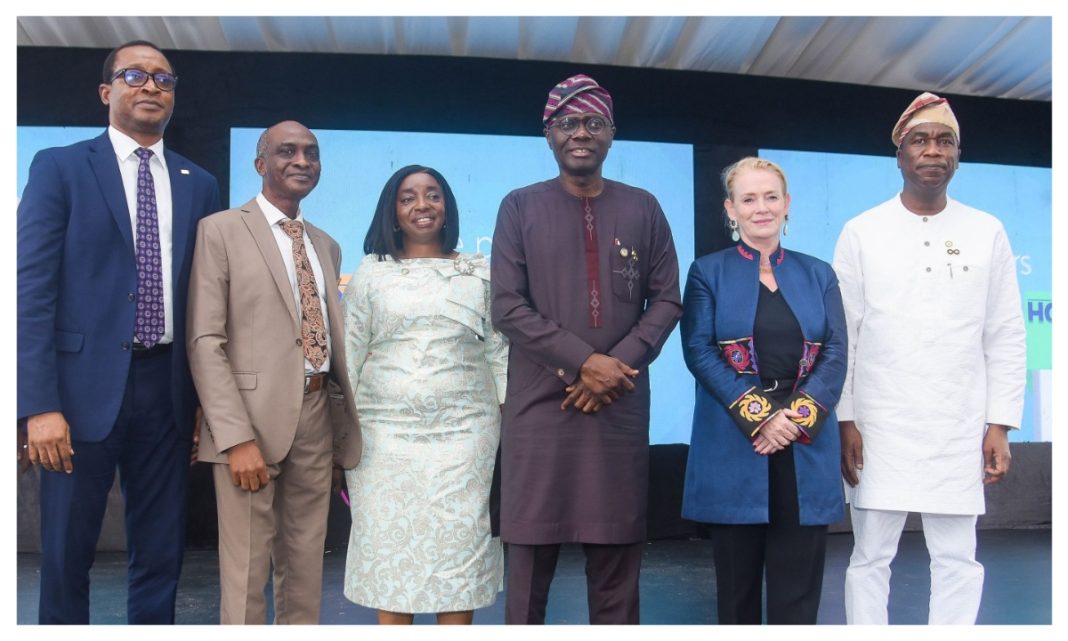
In Lagos, early signs of progress are already evident. Speaking during a public presentation on the state’s implementation status, Governor Babajide Sanwo-Olu highlighted improvements in education and healthcare delivery, attributing the gains to a shift from input-based spending to performance-driven results.
“For us in Lagos, this is about people,” he said. “It is about ensuring that a child has access to the right learning materials, that a mother receives quality care at a primary health centre, and that public resources are managed transparently for all to see.”
Akin Onimole, Senior Procurement Specialist at the World Bank, noted that the initiative is addressing long-standing structural challenges in service delivery. He commended Lagos for its strong commitment to improving procurement processes and institutional frameworks, which are key to translating reforms into tangible outcomes.
FCMB is responsible for facilitating fund flows within the programme, a role the bank says aligns with its broader mission to expand access and economic opportunity.
“We are working with our partners to open up more opportunities for children and communities,” said Yemisi Edun. “By supporting education and primary healthcare, we are contributing to a system where more people can participate and progress.”