

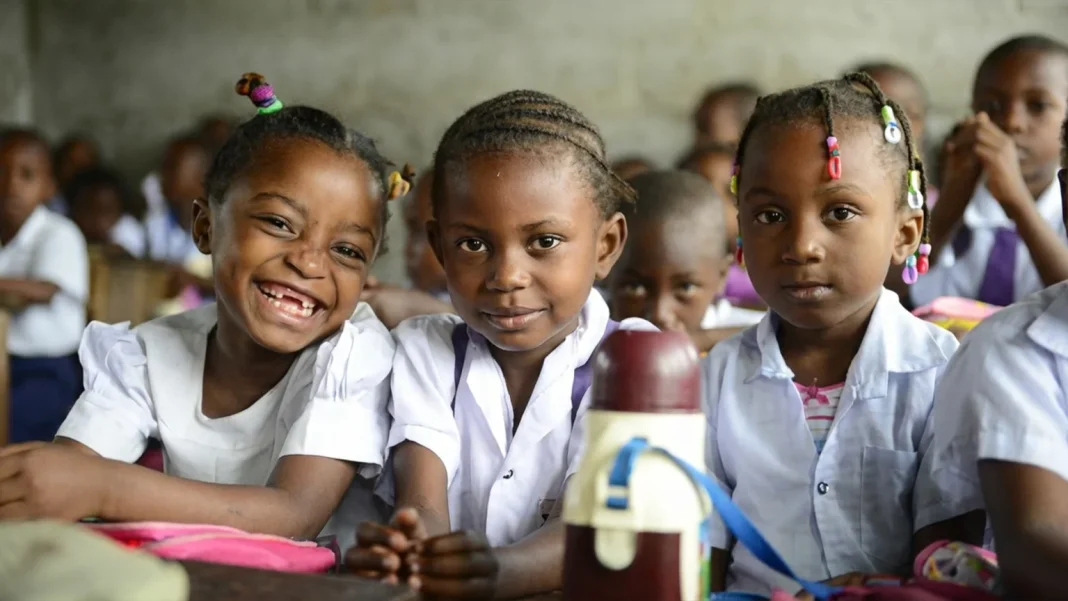

Former Liberian President, Ellen Johnson Sirleaf, alongside the European Union, has raised fresh concerns about Nigeria’s worsening girl-child education crisis, warning that millions of out-of-school girls pose a serious threat to the nation’s future.
The warning came at a high-level forum in Abuja organised by the Rochas Foundation, themed “Give to Gain: Women, Education and Impact – The Ripple Effect.”
Speaking at the event, Sirleaf, a Nobel Peace Prize laureate, urged Nigeria to go beyond increasing access to education and focus on creating real opportunities for girls to take on leadership and economic roles.
Reflecting on her 2017 visit to the foundation’s college in Imo State, she praised its inclusive model, noting that nearly half of its beneficiaries are girls describing it as a strategic investment in Africa’s future.
“If we educate girls but fail to create opportunities for them to lead, then we have only done half the work,” she said.
“When you educate a girl, you change the trajectory of generations.”
Sirleaf stressed that education must lead to empowerment, active participation, and long-term societal transformation. She also called for deliberate policies to ensure women’s inclusion in governance and decision-making.
Meanwhile, EU Ambassador to Nigeria, Gautier Mignot, described girls’ education as a critical driver of national development.
He shared a personal experience from visiting an internally displaced persons (IDP) camp, where an 18-year-old girl who had never been to school expressed her dream of getting an education highlighting the stark realities many girls face.
Mignot pointed to persistent barriers such as poverty, gender-based violence, and lack of basic facilities like sanitary products and safe restrooms as key factors keeping girls out of school.
Also speaking, Director-General of the foundation, Uchechi Rochas, called for collective action to address the crisis.
She revealed that while the foundation has supported over 41,000 young people across Africa, the scale of the problem remains overwhelming, with an estimated 7.8 million girls still out of school in Nigeria.
“This is not a welcome—it is a recruitment. It takes all of us to fix this,” she said.
Rochas highlighted northern Nigeria as particularly affected, citing cultural practices and early marriage as major barriers to girls’ education.
“Education is not just literacy. It is empowerment. It is permission not to get married at 16.”
The forum also featured inspiring success stories, including that of Zainab, a former beneficiary who has become an educator and community leader demonstrating the transformative power of education.
“If we fail the girl today, we fail the woman tomorrow,” Rochas concluded.