

The Universal Basic Education Commission (UBEC) has introduced a new performance-based financing strategy under its HOPE-EDU programme aimed at tackling Nigeria’s growing out-of-school children crisis and improving access to quality basic education.
Executive Secretary of UBEC, Dr Aisha Garba, disclosed that the initiative would reward states with funding only after achieving measurable progress in returning children to school and strengthening education delivery.
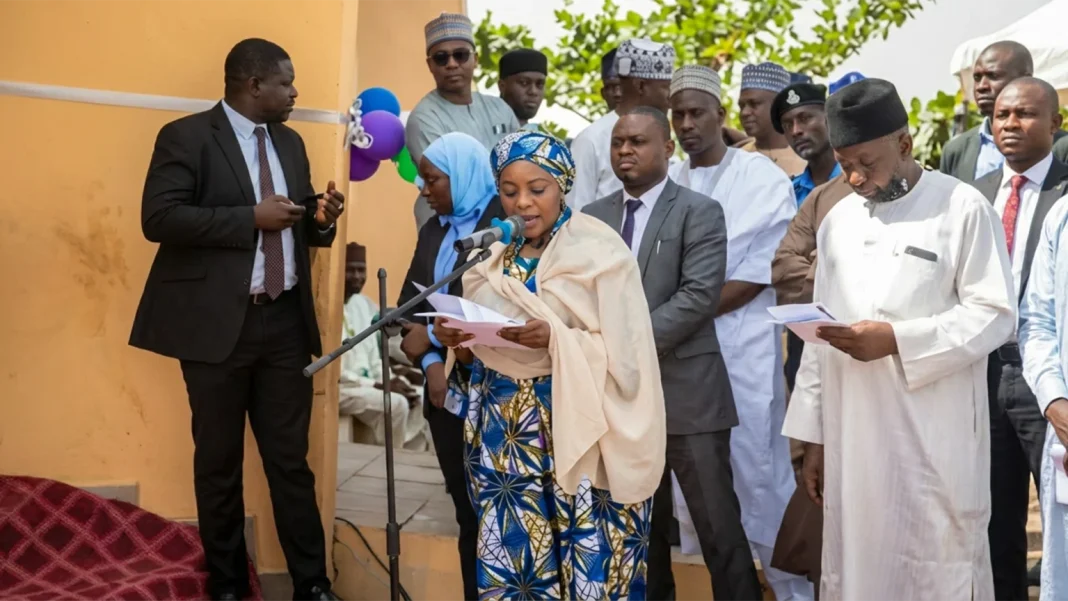
Speaking during the opening of a two-day sensitisation workshop in Kano, Garba explained that the programme is funded by the World Bank and the Global Partnership for Education (GPE) in partnership with State Universal Basic Education Boards (SUBEBs).
According to her, the $552.18 million intervention is designed to improve school enrolment, upgrade infrastructure, empower teachers, and provide technical support to states across the country.
Garba noted that the programme operates under a results-driven financing structure where states receive incentive rewards based on verified achievements in reducing the number of out-of-school children.
“The basic education sector remains a major priority for the government. This programme is focused on increasing access to education, especially for out-of-school children, while also improving the quality of teaching through teacher empowerment and capacity building,” she said.
She described the financing model as a strategic shift capable of driving accountability and measurable outcomes in the education sector.
Explaining the structure further, Garba stated that states would implement the programme through their SUBEBs, while the World Bank would assess and verify the results before releasing funds.
“For instance, if a state succeeds in bringing a significant number of out-of-school children back into classrooms, the achievements will be verified and funding will be provided based on the results recorded,” she explained.
Garba added that the sensitisation programme was organised to help stakeholders from north-west and north-east SUBEBs understand the operational guidelines and implementation strategies for the HOPE-EDU initiative.
Also speaking at the event, Kano State Commissioner for Education, Dr Ali Makoda, said the state government was ready to maximise the opportunities provided by the intervention to improve learning outcomes in public schools.
Makoda noted that the Kano State Government had already demonstrated commitment to education through increased funding, recruitment of teachers, and the declaration of a state of emergency in the sector.
He commended the Federal Government for launching the programme and assured that Kano would work towards meeting the performance targets outlined under HOPE-EDU.