

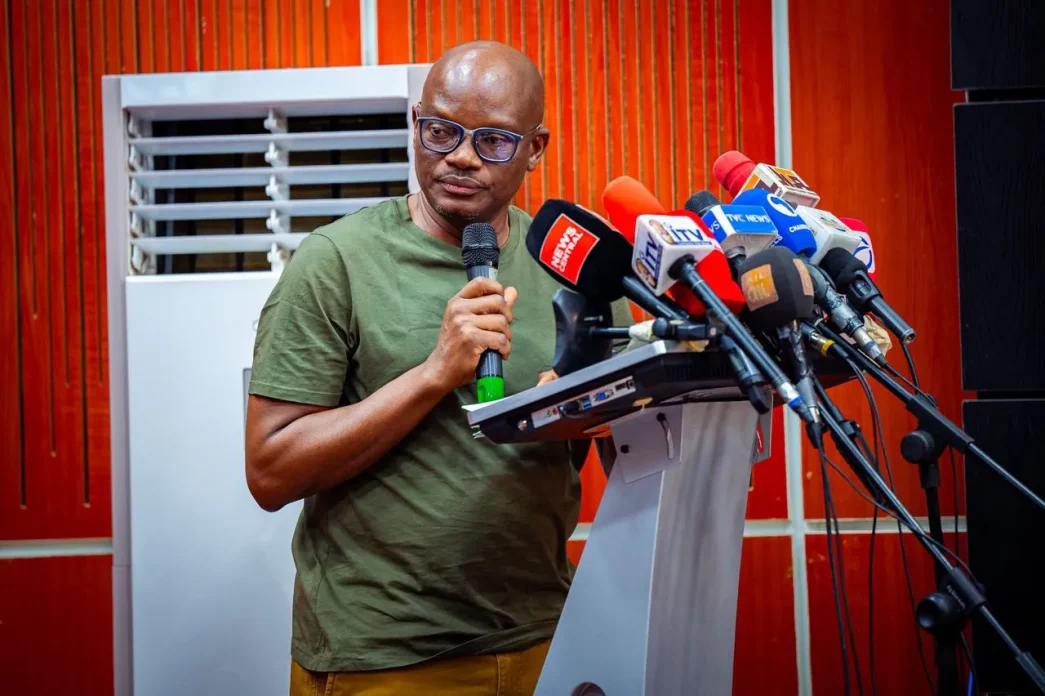

The president of the Academic Staff Union of Universities (ASUU), Christopher Piwuna, has explained why some federal universities in Nigeria were unable to pay their lecturers full salaries for January.
The issue comes shortly after the federal government signed a new agreement with ASUU on January 14, aimed at resolving long-standing disputes and preventing frequent strikes in public universities. The agreement was reached after several months of negotiations that ended in December 2025.
Despite the agreement, many lecturers across federal universities have experienced delays in receiving their salaries since early February.
Recently, lecturers at the University of Lagos (UNILAG) began an indefinite strike over the non-payment of their full salaries. However, the strike was later suspended after discussions with the university management.
According to sources within the academic community, the federal government has not yet released the necessary funds to universities. Instead, the Ministry of Education reportedly directed institutions to pay lecturers using their internally generated revenue (IGR).
Speaking on the situation, ASUU president Christopher Piwuna said the problem is mainly due to difficulties in implementing the new salary agreement, especially because the 2026 national budget has not yet been passed.
He explained that although the government has shown commitment to implementing the agreement, the new salary structure cannot be fully applied until the 2026 budget is approved and signed into law.
“In January, some universities were able to pay the full amount based on the new agreement, while others could not meet up with the full payment,” Piwuna said.
He also noted that, at the time of speaking, he was not aware of any university that had paid lecturers their February salaries.
Piwuna added that the implementation process has also been complicated by issues related to special allowances for lecturers in medical fields. While some universities have started paying these allowances, others are yet to do so.
He said the Ministry of Education is currently working with the National Salaries, Incomes and Wages Commission to clarify how the payments should be made.
Another concern raised by some vice chancellors is whether lecturers on sabbatical should benefit from the new agreement. However, ASUU insists that such lecturers are entitled to full payment.
The ASUU president also noted that state universities have not yet started implementing the agreement. He said the union has written to state governors, urging them to ensure the agreement is implemented in their institutions to avoid accumulating salary arrears.
Piwuna appealed to lecturers across public universities to remain patient while the issues are being resolved. He expressed hope that the situation will improve once the 2026 national budget is passed and signed into law later this month.