

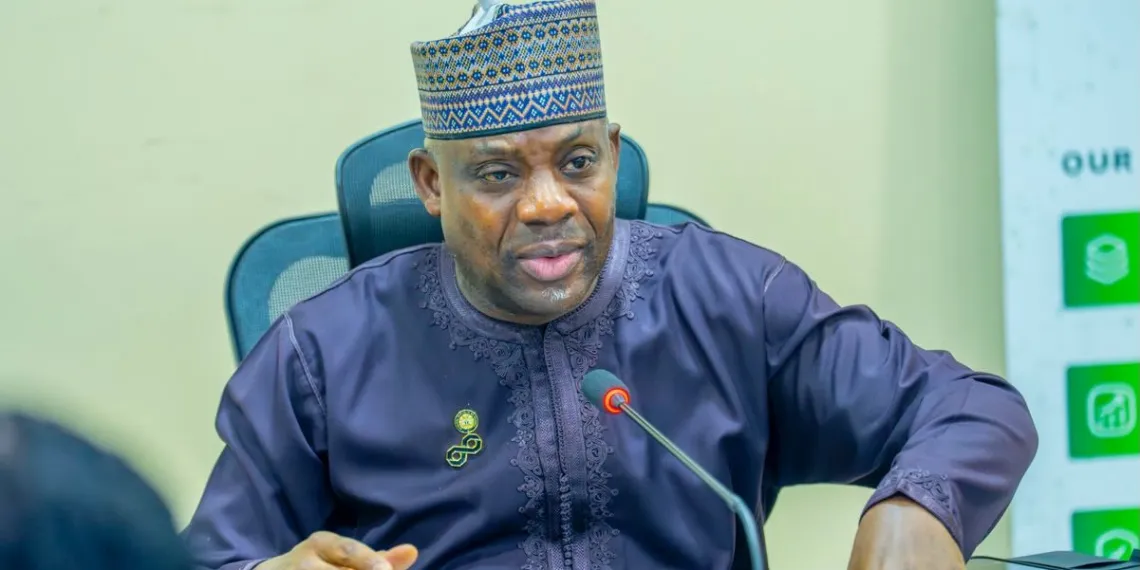
The Federal Ministry of Education, under the leadership of Minister Tunji Alausa, has proposed a N2.4 trillion budget for the 2026 fiscal year. Presented before the National Assembly’s Joint Committees on Education, this fiscal blueprint is not merely a collection of figures but a targeted intervention aimed at revitalizing Nigeria’s struggling educational landscape. By focusing on teacher shortages, infrastructure deficits, and specialized skills development, the proposal seeks to align national learning outcomes with the economic demands of the 21st century.
At the heart of this budgetary framework is the Nigeria Education Sector Renewal Initiative (NESRI). This initiative marks a pivot toward practical and specialized education, emphasizing Technical and Vocational Education and Training (TVET) alongside STEMM (Science, Technology, Engineering, Mathematics, and Medical sciences). The Minister’s strategy recognizes that for Nigeria to achieve sustainable development, it must bridge the gap between formal education and employability. Furthermore, the 2026 proposal places a high premium on social equity, with specific allocations aimed at integrating out-of-school children into the classroom and expanding access to literacy and education for the girl-child.
However, the ambition of these goals is set against a backdrop of severe physical and systemic decay. Minister Alausa noted that Nigeria’s 13,921 public secondary schools—including the historic Unity Colleges—are grappling with massive infrastructure deficits. Many of these institutions are over five decades old and lack the facilities necessary for modern instruction. Beyond the physical structures, the sector faces persistent headwinds in the form of regional insecurity, inadequate research-to-industry linkages, and a desperate need for the professionalization of the teaching workforce. To navigate these hurdles, the Ministry has called for sustained legislative support and prudent financial management to ensure a lasting legacy by the end of the 2026 financial year.
The distribution of the proposed N2.4 trillion reveals a clear hierarchy of priorities. Universities are set to receive the lion’s share at N966.9 billion (40.3%), followed by parastatals at N633.2 billion (26.4%). Polytechnics and Colleges of Education are allocated 10.7% and 5.2% respectively, while Unity Colleges are slated for 6.4%. While these figures represent a significant investment, they highlight a concerning trend: although the education budget has grown since 2024, the 2026 proposal of N2.39 trillion is a slight decrease from the N2.59 trillion seen in 2025. More critically, Nigeria’s education spending continues to hover around 6.54% of the total national budget, falling significantly short of the 15–20% benchmark recommended by UNESCO.
Perhaps the most pressing challenge identified during the budget defense was the issue of “budgetary performance” rather than just “allocation.” In 2025, the ministry saw a dismal capital release rate of just 5.8%, a sharp decline from the previous year. This suggests that even when funds are promised on paper, bureaucratic or liquidity bottlenecks prevent them from reaching classrooms and laboratories. With meal subsidies for Unity Colleges being funded at only 53.4% in the previous cycle, the 2026 fiscal year will require not just a robust budget, but an aggressive commitment to execution and transparency if the Nigeria Education Sector Renewal Initiative is to succeed.